Business Finance Guides
Plain-English guides to UK business loans, asset finance, invoice financing, and business credit cards. Compare lenders, check what you'll qualify for, and walk into a funding decision already knowing the answers.

Business Loans
View all
UK Small Business Statistics: Lending, Approval Rates and Late Payments
UK small business statistics show a lending market that grew strongly in 2025 but remains uneven: bank lending to SMEs rose to roughly £68 billion, the second-highest annual total on record, while the share of small firms using any external finance has fallen from 50% to 43% over the same period.

Agricultural Finance UK: Farm Loans for Land, Working Capital and Diversification
Agricultural finance covers the loans, grants and credit lines that fund farm businesses: land and building purchases, seasonal working capital, diversification projects like glamping or farm shops, and cash-flow bridges during subsidy transitions.

Bad Credit Business Loans UK: What Lenders Check and Realistic Options
Yes, you can get a business loan with bad credit in the UK, but your options narrow and the terms usually cost more. Lenders look at the company's credit file, the director's personal credit, current trading and cash flow, not the score alone.
Asset Finance
View all
Medical and Dental Equipment Finance UK: Funding High-Cost Practice Assets
Medical and dental equipment finance lets a practice spread the cost of chairs, imaging, sterilisation equipment and fit-outs through hire purchase, a finance lease or contract hire instead of paying upfront. Sources include suppliers' finance teams such as Henry Schein's, professional lenders such as Wesleyan, and brokers.

Operating Lease vs Finance Lease: Ownership, Accounting and Tax
A finance lease passes most of the risks and rewards of owning an asset to your business; an operating lease leaves them with the leasing company.

Asset Finance Brokers UK: Banks, Specialists and Brokers Compared
Asset finance brokers match businesses with lenders that fund vehicles, plant and equipment, comparing hire purchase, finance lease and other structures across a panel of providers instead of a single balance sheet. Banks suit businesses with existing banking relationships and straightforward credit profiles.
Invoice Financing
View all
Confidential Invoice Discounting UK: Keeping Customer Relationships Private
Confidential invoice discounting is a credit line secured on your unpaid business invoices that your customers aren't told about. Lenders such as NatWest, Barclays and Skipton advance up to 90% of approved invoices (HSBC up to 95%), and you keep running credit control.

Invoice Finance Brokers UK: What They Do and When to Use One
An invoice finance broker matches your business with factoring, invoice discounting or selective invoice finance providers, negotiates terms and handles the application. Most are paid commission by the provider rather than charging you, so ask who pays them, how much, and whether they search the whole market or a panel.

Invoice Financing Costs in the UK: Typical Fees, Discount Rates and Total Interest Explained for 2026
Invoice finance costs a service fee on your turnover plus a discount charge on the cash you draw. Novuna puts factoring service fees at about 0.5% to 3% of turnover and invoice discounting at 0.2% to 0.5%, with a discount charge of 1.5% to 3% over Bank of England base rate (about 5.5% to 7% a year with Bank Rate at 4%).
Bridging Loans
View all
Commercial Property Bridging Loans for UK Business Owners: Fast Funding Solutions
Commercial property bridging loans for UK business owners provide short-term funding from £25,000 to £60 million, typically for 1-24 months, with interest rates starting from 0.75% per month. These loans enable rapid property acquisitions, refinancing, and development projects when traditional bank lending moves too slowly for time-sensitive opportunities.

How Fast Can a Bridging Loan Complete? UK Timelines, Documents and Delays
Brokers most often quote 2-4 weeks for a straightforward bridging loan, and the fastest cases complete in 7-14 days. The 2025 industry average was longer, at 43 days (about six weeks, an eight-year low), so plan for around six weeks unless your documents, valuation and solicitors are ready from the start.

Why Bridging Loans Get Declined: Weak Exits, Valuation Gaps and Affordability Issues
Bridging loans get declined primarily due to weak exit strategies that lack specific repayment plans, significant valuation gaps between borrower expectations and lender assessments, and affordability concerns where borrowers can't demonstrate sufficient reserves to cover potential delays or additional costs.
Development Finance
View all
Cost Overruns in Development Finance: How Contingency and Reforecasting Work
Cost overruns in development finance occur when actual project expenses exceed approved budgets, forcing developers to inject additional equity or secure supplementary funding.

Development Finance for First-Time Developers: What Lenders Need to See
First-time developers can access development finance from approximately 30-40 specialist lenders in the UK, but they'll face stricter criteria including higher equity requirements (minimum 20%), lower loan-to-value ratios (50-60% LTGDV), and higher interest rates (8-12% annually).

Development Finance for SPVs: Why Property Schemes Use Special Purpose Vehicles
Over 80% of UK development finance applications in 2026 now use Special Purpose Vehicle (SPV) structures rather than personal or main company borrowing.
Business Credit Cards
View all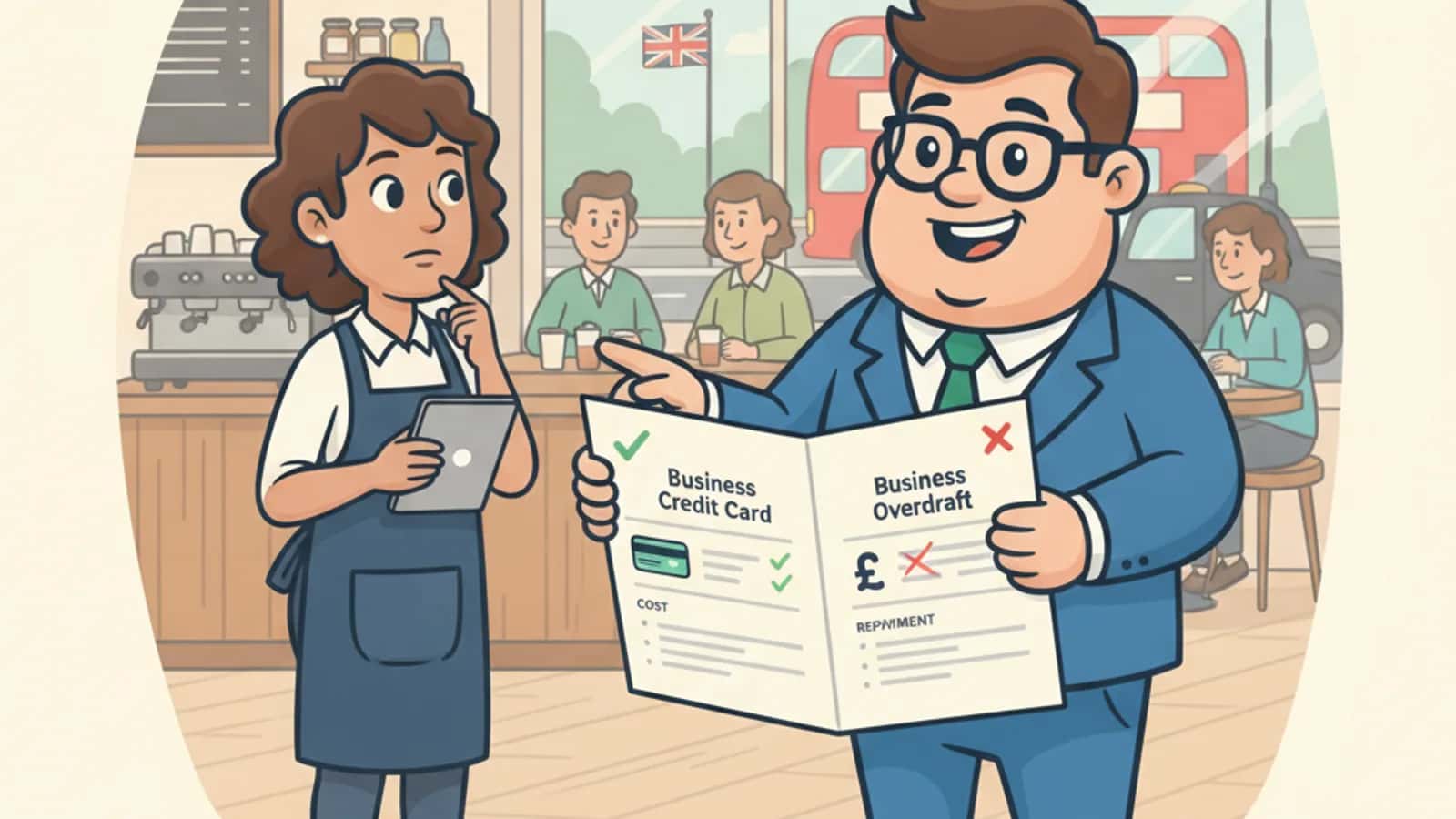
Business Credit Card vs Business Overdraft: Cost, Access and Repayment Compared
A business credit card gives you a revolving credit line you can spend, repay, and reuse, with up to 56 days interest-free, rewards, and spend controls built in. A business overdraft sits on your current account and charges interest from day one of use.

Business Credit Card vs Business Loan: Which Fits the Expense?
A business credit card suits recurring, smaller, or short-term expenses where speed and spend control matter, think ad spend, supplier invoices, travel, or staff costs. A business loan suits larger, one-off capital needs where you want a fixed repayment schedule and a lump sum upfront.

Business Credit Card vs Charge Card: Borrowing, Repayment and Fees Compared
A business credit card lets you carry a balance month to month and pay interest on what you owe. A business charge card must be paid in full every billing cycle, no revolving balance, no APR on carried debt, but often no preset spending limit either.
Ready when you are
See what funding your business could get
Start a short eligibility check and compare selected business funding options. It only takes about 2 minutes, with no hard credit check to start.