
Business Credit Card vs Business Overdraft: Cost, Access and Repayment Compared
A business credit card gives you a revolving credit line you can spend, repay, and reuse, with up to 56 days interest-free, rewards, and spend controls built in. A business overdraft sits on your current account and charges interest from day one of use.
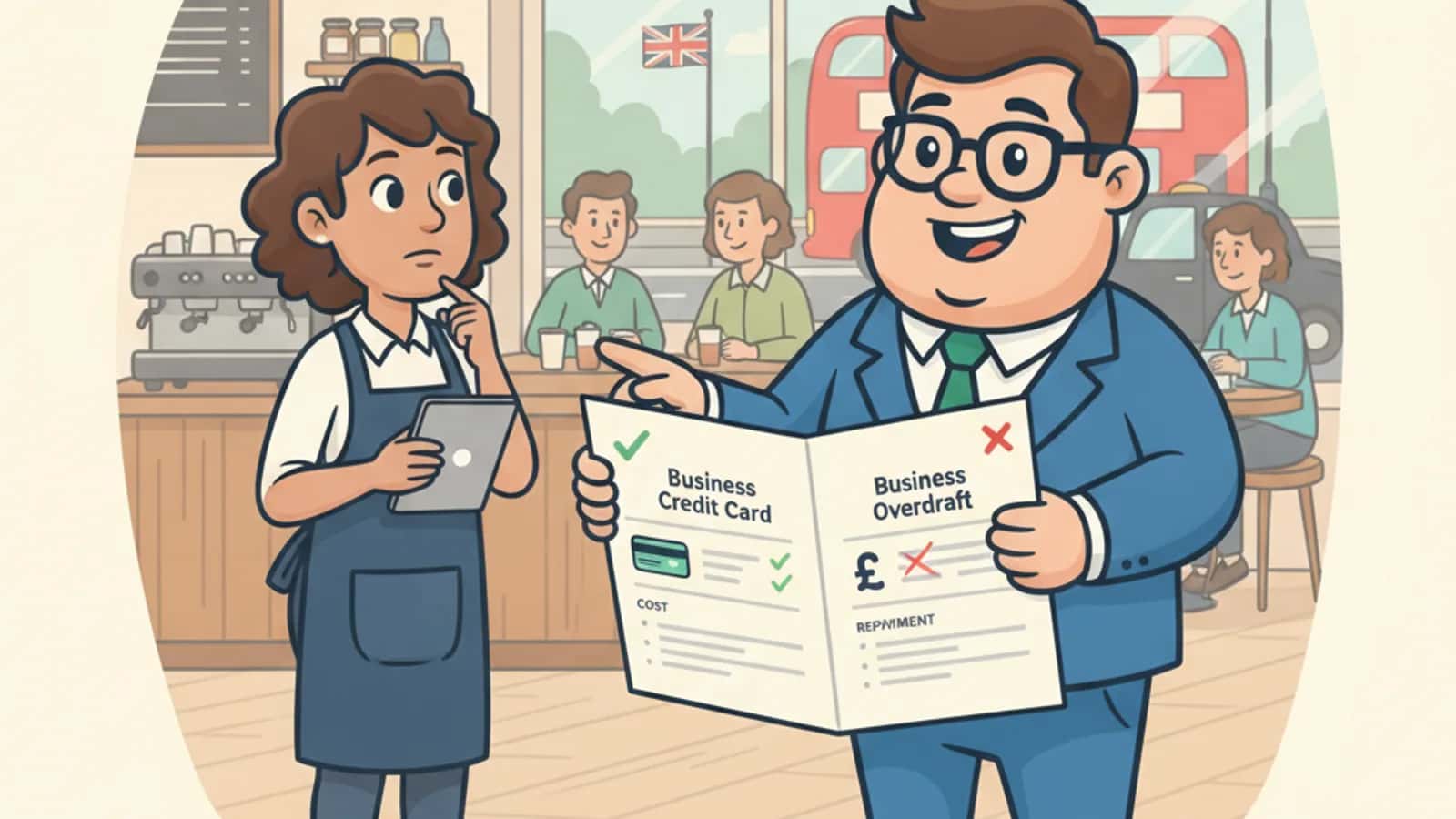
Quick answer
A business credit card gives you a revolving credit line you can spend, repay, and reuse, with up to 56 days interest-free, rewards, and spend controls built in. A business overdraft sits on your current account and charges interest from day one of use. For most UK SMEs comparing business credit card vs business overdraft: cost, access and repayment compared side by side, the credit card wins on cost (if you clear the balance), speed of access, and day-to-day spend visibility. The overdraft wins on flexibility for unpredictable cash shortfalls that land directly in your account.
Key takeaways
- Business credit cards typically offer up to 56 days interest-free; overdrafts charge interest from the first day you dip below zero
- Overdraft arrangement fees and annual renewal fees can add up fast, even when you never use the facility
- Business credit cards can come with cashback, rewards, virtual cards, and employee cards, overdrafts offer none of these
- Approval for a business credit card can take days; a bank overdraft can take weeks and often requires a branch relationship
- Overdraft limits are usually lower than business credit card limits, which can reach £250k+ through specialist providers
- Bad credit doesn't automatically rule out a business credit card, some providers assess trading history and revenue, not just credit score
- Repayment on a credit card is flexible (minimum payment or full balance); overdraft repayment is effectively on demand at the bank's discretion
- Section 75 does NOT apply to business credit cards, but chargeback rights and provider purchase protection may still apply
- A business credit card does not replace an overdraft for cash that needs to land in your bank account directly
- Running both products gives most growing businesses the best of both: a safety net for the account and a controlled spend tool for the team
What's the Difference Between a Business Credit Card and a Business Overdraft?

A business credit card is a revolving credit facility attached to a card you spend on directly. A business overdraft is a pre-agreed buffer on your business current account that lets you go below zero. They solve similar problems, short-term funding gaps, but work in completely different ways.
Business credit card
- Separate product from your bank account
- Spend on the card, repay monthly
- Interest-free period of up to 56 days if you clear the balance
- Comes with spend controls, employee cards, virtual cards, and often cashback
- Limits from £1,000 to £250,000+ depending on the provider
Business overdraft
- Attached to your business current account
- Funds appear directly in your account when you go below zero
- Interest charged from day one of use
- No rewards, no spend controls, no employee card functionality
- Limits typically lower, often £500 to £25,000 for SMEs
The key distinction: a credit card is a spending tool with built-in controls and a grace period. An overdraft is a cash buffer. If you need money to land in your bank account, to pay a supplier by BACS, for example, a credit card won't do that directly. If you need to pay for stock, software, travel, or ad spend, a card is almost always the cheaper and more practical option.
For a broader look at how overdrafts compare to other funding types, see this guide on business overdraft vs line of credit vs loan.
Business Credit Card vs Business Overdraft: Which Is Cheaper?
If you clear your credit card balance in full each month, a business credit card is almost always cheaper than an overdraft. The interest-free period means you pay nothing in interest at all. An overdraft charges interest from the moment you use it, plus arrangement fees you pay regardless of whether you dip into it. For more detail, see our guide to business credit cards vs business loans.
The comparison shifts if you carry a credit card balance. Most business credit cards charge between 20% and 35% APR on carried balances. That's higher than many overdraft rates, which typically sit between 10% and 20% EAR for arranged facilities.
Cost comparison at a glance:
| Cost Factor | Business Credit Card | Business Overdraft |
|---|---|---|
| Interest-free period | Up to 56 days | None |
| Interest on balance | 20-35% APR (if carried) | 10-20% EAR (arranged) |
| Arrangement fee | Usually none | £50,£500+ per year |
| Annual fee | £0,£200+ | Renewal fee often applies |
| Rewards/cashback | Yes (on many cards) | No |
| Unarranged penalty | Late payment fee | High penalty rates |
*Rates above are indicative ranges based on typical UK provider terms as of 2026. Always check the specific product's representative APR or EAR before applying.*
For businesses that pay off the card monthly, which most disciplined finance teams do, the credit card wins on cost by a significant margin.
How Much Does a Business Overdraft Cost in Fees and Interest?
A business overdraft typically costs in three ways: an arrangement fee when it's set up, an annual renewal fee, and interest on the amount you actually use.
Arrangement fees at UK high street banks commonly range from £50 to £500 or more depending on the limit size. Annual renewal fees apply even if you never use the facility. Interest rates on arranged overdrafts typically sit between 10% and 20% EAR, though some specialist or challenger bank products sit outside this range.
Unarranged overdraft use, going beyond your agreed limit, can trigger much higher rates and daily penalty charges. The FCA introduced rules in 2020 requiring banks to charge a single annual interest rate for overdrafts (removing fixed daily fees), but rates on unarranged borrowing can still be substantially higher than arranged rates.
You're paying for the facility to exist, whether you use it or not. That's a cost that doesn't apply to most business credit cards.
Business Credit Card Interest Rates Compared to Overdraft Rates
Business credit card APRs in the UK typically range from around 20% to 35% for standard products, with some charge cards and corporate cards operating differently. Overdraft EARs tend to be lower, often 10% to 20% for arranged facilities.
So on paper, overdrafts look cheaper for carried balances. But the comparison only holds if you're consistently carrying a balance and never clearing the card. Most businesses that manage cash flow well clear the card monthly and pay zero interest. In that scenario, the overdraft's lower rate is irrelevant, you're still paying arrangement fees on the overdraft and earning nothing back.
Which is right for you?
Choose the overdraft rate if
you know you'll carry a balance for several months and the overdraft limit covers your need.
Choose the credit card if
you can clear the balance monthly, you want to earn cashback, or you need spend controls across a team.
For context on how business borrowing costs compare more broadly, the average business loan interest rates UK guide covers the full picture.
How Quickly Can You Access Funds, Overdraft vs Credit Card?
A business credit card from a specialist provider can be approved and ready to use within days. Some providers issue virtual cards almost immediately after approval, so your team can start spending before physical cards arrive. A business overdraft at a high street bank can take weeks, it often requires a formal application, credit assessment, and sometimes a branch meeting.
For businesses that need working capital headroom fast, the credit card is the faster route. The Funding Fred eligibility check takes two minutes and involves no hard credit search to start. That's a very different experience from waiting for a bank to review your overdraft application.
If speed matters, covering a supplier invoice this week, kitting out a new team member with a card, or funding a campaign before the window closes, a business credit card is the more practical tool.
Which Is Easier to Get Approved For: Credit Card or Overdraft?
For most UK SMEs, a business credit card is easier to get approved for than a business overdraft. Banks typically require an established relationship, trading history, and sometimes a personal guarantee before granting an overdraft. Credit card providers, especially those outside the high street banks, are often more flexible, assessing revenue, trading history, and business health rather than relying solely on a credit score.
Overdraft applications also tend to involve more paperwork: bank statements, management accounts, and sometimes a formal business plan. Credit card applications are usually shorter and faster.
That said, neither product guarantees approval. Limits and eligibility vary by provider, and a card provider's full application involves its own credit assessment separate from any initial eligibility check.
Can You Get a Business Credit Card With Bad Credit?
Bad credit doesn't automatically rule out a business credit card. Some providers focus more on your business's trading history, monthly revenue, and cash flow than on a credit score alone. Others offer lower starting limits with the option to increase over time as you build a repayment track record.
A business overdraft with bad credit is harder. Banks are generally more conservative about overdraft facilities for businesses with adverse credit history, and the terms, if you're approved, may be less favourable.
If your business has had credit issues, it's worth understanding your business credit score before applying, and looking at providers who specialise in businesses that don't fit the standard bank mould. The Funding Fred 2-minute check shows eligibility without a hard search, so you can see your options before committing.
For businesses that have been declined elsewhere, the guide on what to do after a business loan decline covers next steps across different product types.
Business Overdraft Repayment Terms: How Long Do You Have to Pay Back?
A business overdraft is technically repayable on demand. The bank can reduce or withdraw the facility at any time, including at annual renewal. There's no fixed repayment schedule; you simply need to keep within the agreed limit and bring the balance back into credit when the bank asks.
In practice, most businesses use overdrafts as a rolling facility. But the "on demand" nature is a real risk. If your bank decides not to renew, or reduces your limit at a difficult moment in the trading year, you may need to find alternative funding quickly.
A business credit card has a minimum monthly payment (typically 1-3% of the outstanding balance or a fixed minimum, whichever is higher). You can clear the full balance to avoid interest, pay the minimum to preserve cash, or pay anything in between. That flexibility is one of the credit card's genuine advantages over an overdraft.
What Happens If You Can't Repay a Business Credit Card Balance?
If you miss a payment or only make minimum payments over a long period, interest accrues on the outstanding balance at the card's APR. Late payment fees apply. Persistent missed payments can damage your business credit profile and, if a personal guarantee was signed, may affect your personal credit too.
Most card providers will work with businesses facing genuine short-term difficulty, it's worth contacting them before missing a payment rather than after. The Financial Ombudsman Service handles complaints about business credit card providers, though its jurisdiction for business products differs from consumer cards.
The critical point: a business credit card balance that grows unchecked becomes expensive fast at 20-35% APR. Use the interest-free period as it's designed, clear the balance monthly, and the card costs you nothing in interest.
Business Credit Card Rewards vs Overdraft Benefits: Which Is Better?
Business credit cards win this comparison outright. Overdrafts have no rewards programme. A business credit card can earn cashback on ad spend, travel, and supplier payments, and for businesses spending tens of thousands per month, that cashback adds up to a meaningful amount.
Beyond cashback, business credit cards offer:
- Employee cards with individual spend limits
- Virtual cards for online subscriptions and one-off purchases
- Real-time spend visibility across the team
- Integration with accounting software in many cases
- Purchase protection through the card provider (note: Section 75 of the Consumer Credit Act does not apply to business credit cards, but chargeback rights through the card scheme and provider-specific purchase protection may still be available)
An overdraft gives you a cash buffer. That's its only benefit. For businesses that are already managing cash flow reasonably well, the rewards and controls on a credit card deliver more practical value day-to-day.
What Are the Hidden Fees on Business Credit Cards?
Most business credit cards are transparent about their fees, but a few catch businesses out:
- Foreign transaction fees:
- Typically 2-3% on purchases made in a foreign currency. Relevant for businesses buying from overseas suppliers or travelling internationally.
- Cash advance fees:
- Using a business credit card to withdraw cash or transfer funds to a bank account usually triggers an immediate fee (often 2-3%) and interest from day one, no interest-free period applies.
- Late payment fees:
- Missing the minimum payment triggers a fee, usually £12,£25, and can affect your credit profile.
- Annual fees:
- Some premium business cards charge £100,£200+ per year. Factor this against the rewards you'll actually earn.
- Additional cardholder fees:
- Some providers charge per employee card; others include them free.
The cash advance point is particularly important in the context of this comparison. If you try to use a credit card to move money directly into your bank account, you lose the interest-free period and pay a fee on top. For that use case, an overdraft or a different funding product is more appropriate.
Can You Use a Business Credit Card to Cover an Overdraft?
Not directly. A business credit card can't transfer funds into your current account without triggering a cash advance, which comes with fees and immediate interest. So you can't use a credit card to "top up" your bank account and avoid an overdraft in the traditional sense. Read using business credit cards for cash flow: the key points for the key considerations.
What a business credit card can do is reduce your reliance on the overdraft. If your team's expenses, supplier payments, and operating costs go on the card instead of through the current account, your account balance stays higher, and you're less likely to need the overdraft at all.
Many businesses find that once they start routing regular spend through a card with up to 56 days interest-free, their overdraft usage drops significantly. The card becomes the working capital buffer, and the overdraft sits unused as a backstop.
When Should a Small Business Use a Credit Card Instead of an Overdraft?
A business credit card is the better choice in most day-to-day spend scenarios. Use a credit card when:
- You're paying for stock, software, advertising, travel, or services by card
- You want to give team members controlled spending access without sharing a single account
- You want to earn cashback or rewards on regular business spend
- You need a higher limit than your bank will offer on an overdraft
- You want faster access to a facility without weeks of bank paperwork
- You're managing month-end expense admin and want cleaner reporting
An overdraft is better when:
- You need cash to land directly in your account (BACS payments, payroll shortfalls, HMRC payments)
- You have a genuinely unpredictable cash flow gap that could land anywhere in the month
- You're managing a short-term mismatch between when invoices are paid and when costs fall due
For businesses dealing with persistent cash flow timing issues, it's also worth reading about cash flow business loans as a more structured alternative to either product.
The honest answer for most growing UK businesses: you probably need both. A credit card for controlled day-to-day spend, and a modest overdraft as an emergency cash buffer.
Next steps
The business credit card vs business overdraft: cost, access and repayment compared question doesn't have a single right answer, but it does have a clear pattern. For most UK limited companies, agencies, e-commerce brands, and growing SMEs, a business credit card is the better everyday tool: faster to access, cheaper if you clear the balance monthly, and far more useful for controlling team spend and earning something back on what you're already spending. Read business credit cards vs charge cards: the key points for the key considerations.
An overdraft has its place, specifically when you need cash in your account, not just card spend. But it's a passive safety net, not an active working capital tool.
If your current limit hasn't moved in years, your staff are putting company spend on personal cards, and your month-end expense admin is a recurring headache, those aren't minor inconveniences. They're signs that the product you're using isn't keeping up with your business.
The Funding Fred 2-minute check matches UK businesses with leading card providers, no hard search to start, no obligation, and limits from £1k to £250k+. Business Credit Cards. Without the Fuss.
Check Eligibility Now and see which providers match your business in minutes.
Frequently asked questions
What's the Difference Between a Business Credit Card and a Business Overdraft?
A business credit card is a revolving credit facility attached to a card you spend on directly. A business overdraft is a pre-agreed buffer on your business current account that lets you go below zero. They solve similar problems, short-term funding gaps, but work in completely different ways.
Business Credit Card vs Business Overdraft: Which Is Cheaper?
If you clear your credit card balance in full each month, a business credit card is almost always cheaper than an overdraft. The interest-free period means you pay nothing in interest at all. An overdraft charges interest from the moment you use it, plus arrangement fees you pay regardless of whether you dip into it. For more detail, see our guide to business credit cards vs business loans.
How Much Does a Business Overdraft Cost in Fees and Interest?
A business overdraft typically costs in three ways: an arrangement fee when it's set up, an annual renewal fee, and interest on the amount you actually use.
How Quickly Can You Access Funds, Overdraft vs Credit Card?
A business credit card from a specialist provider can be approved and ready to use within days. Some providers issue virtual cards almost immediately after approval, so your team can start spending before physical cards arrive. A business overdraft at a high street bank can take weeks, it often requires a formal application, credit assessment, and sometimes a branch meeting.
Which Is Easier to Get Approved For: Credit Card or Overdraft?
For most UK SMEs, a business credit card is easier to get approved for than a business overdraft. Banks typically require an established relationship, trading history, and sometimes a personal guarantee before granting an overdraft. Credit card providers, especially those outside the high street banks, are often more flexible, assessing revenue, trading history, and business health rather than relying solely on a credit score.
Can You Get a Business Credit Card With Bad Credit?
Bad credit doesn't automatically rule out a business credit card. Some providers focus more on your business's trading history, monthly revenue, and cash flow than on a credit score alone. Others offer lower starting limits with the option to increase over time as you build a repayment track record.
Written by
The Funding Fred Editorial Team creates plain-English guides to help business owners understand funding options, eligibility, and application readiness before they compare finance options.
Reviewed by
UK business finance content reviewer
Robert reads our UK business finance guides before they go live, checking each one is accurate, easy to follow, and reflects how lending actually works today — not how a brochure says it should. He's listed on the FCA Register, approved as an SMF3 (AR) Executive Director at Switcha Limited, and connected to Lucky Growth Partners Ltd through its appointed representative relationship, so the regulated detail gets a properly qualified second read.
Sources
- Financial Conduct Authority (FCA). Overdraft pricing rules for personal and business accounts. FCA, 2020.
- Financial Ombudsman Service. Business complaints and our jurisdiction. FOS, 2023.
- UK Finance. Business Finance Review: SME lending and card data. UK Finance, 2024.
- Companies House / GOV.UK. Running a limited company. GOV.UK, 2024.
- HMRC. Business expenses: interest on business loans. GOV.UK, 2024.