Business Credit Card vs Charge Card: Borrowing, Repayment and Fees Compared
A business credit card lets you carry a balance month to month and pay interest on what you owe. A business charge card must be paid in full every billing cycle, no revolving balance, no APR on carried debt, but often no preset spending limit either.

Quick answer
A business credit card lets you carry a balance month to month and pay interest on what you owe. A business charge card must be paid in full every billing cycle, no revolving balance, no APR on carried debt, but often no preset spending limit either. The right choice depends on whether your business needs borrowing flexibility or strict spend discipline.
Key takeaways
- Business credit cards offer a revolving credit line; charge cards are a payment tool that must be cleared each month
- Charge cards typically carry no interest rate because balances cannot roll over, but late payment triggers penalty fees or delinquency interest
- Business credit cards charge APR on carried balances, typically in the range of 15-25%
- Many charge cards have no preset spending limit; credit cards have a fixed credit limit set at approval
- Missing a charge card payment in full can trigger late fees and damage your business credit score
- Both card types can report to business credit agencies and help build a credit profile
- Charge cards often suit businesses with strong, predictable cash flow; credit cards suit those who need short-term borrowing headroom
- Approval for a charge card can be harder for startups with limited trading history
- Rewards programmes exist on both card types, neither has an automatic advantage
What's the Difference Between a Business Credit Card and a Charge Card?

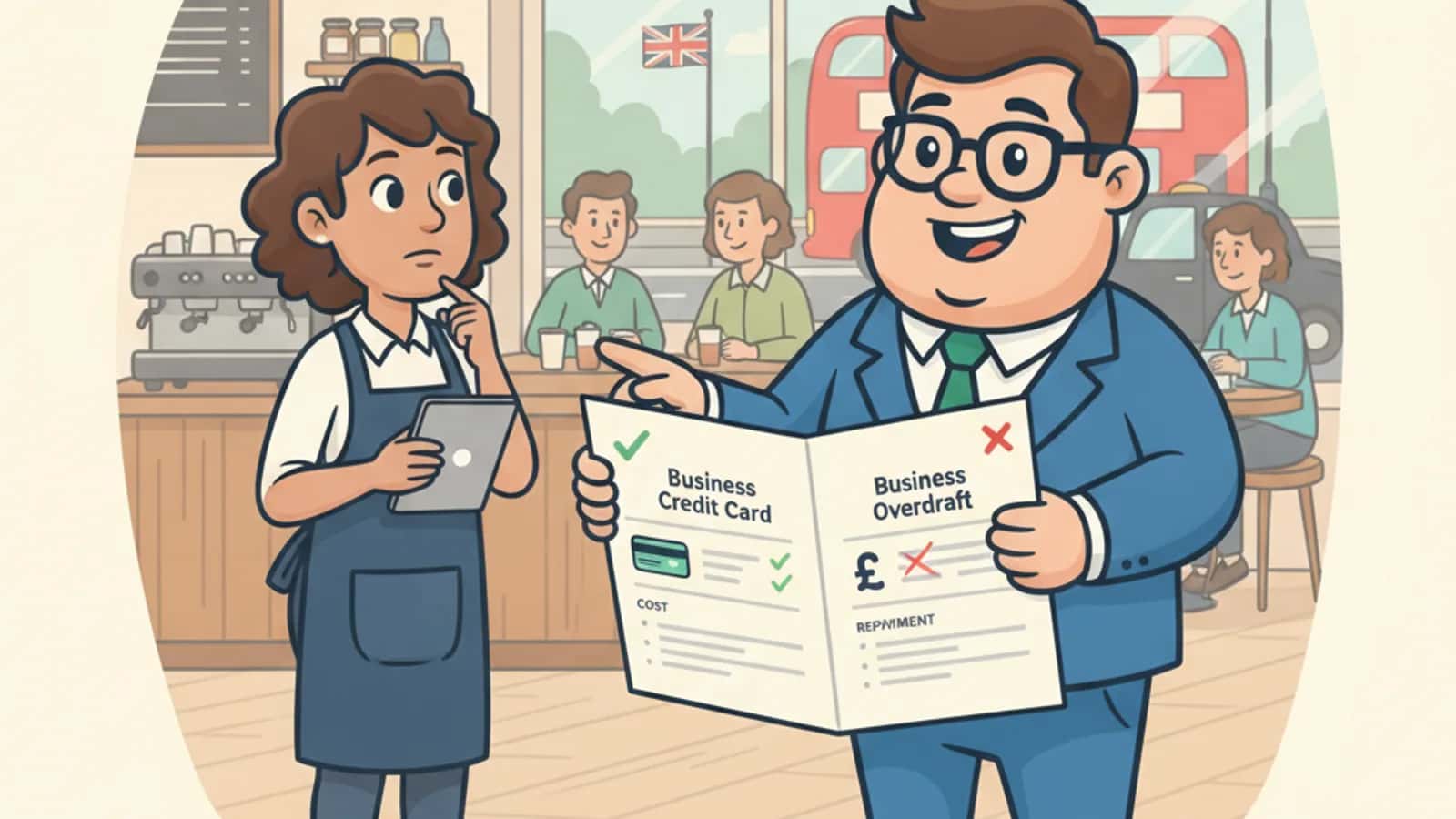
A business credit card is a borrowing product. A charge card is a payment product. That single distinction drives every other difference in how they work, what they cost, and who they suit. For additional context, see a deeper look at business credit cards in the UK.
Business credit card: Comes with a revolving credit line. Spend up to your limit, make at least the minimum payment each month, and carry the rest forward. Interest accrues on the unpaid balance at the card's APR. Read comparing business credit cards: the key points for the key considerations.
Business charge card: Has no revolving balance. Every penny spent must be repaid in full at the end of the billing cycle, usually monthly. There is no option to pay a minimum and roll the debt forward.
For a business choosing between the two in the context of business credit card vs charge card: borrowing, repayment and fees compared, the core question is: do you need the ability to borrow short-term, or do you need a high-capacity payment tool with built-in spend discipline?
Can You Carry a Balance on a Charge Card?

No. Charge card holders must repay the entire balance each billing cycle. There is no minimum payment option and no facility to carry debt into the next month.
This is the defining structural difference in any business credit card vs charge card comparison. A credit card is a lending product regulated accordingly. A charge card is closer to a deferred payment tool, you spend now, settle in full shortly after.
What this means in practice
- A credit card gives you breathing room if a large invoice lands before a client pays
- A charge card forces repayment regardless of your incoming cash position
- Missing a charge card's full payment is treated as a default, not just a partial payment, which carries heavier consequences than missing a credit card minimum
If your business regularly needs to bridge a gap between outgoings and income, a credit card's revolving facility is the more practical tool. For more on how revolving credit compares to other short-term options, see what is a line of credit.
Do Charge Cards Have Interest Rates or Just Annual Fees?
Charge cards generally do not charge ongoing interest because the balance cannot roll over. The model is: pay in full, no interest applies.
However, this does not mean charge cards are free of interest entirely. American Express, for example, states that a 30% annual interest rate applies to delinquent "Due in Full" balances not paid by the next statement date. That penalty rate is significantly higher than a typical credit card APR.
The fee structure on charge cards typically includes
- An annual card fee (often higher than equivalent credit cards, reflecting the premium positioning)
- Late payment or non-payment penalty fees
- Potential delinquency interest if a full payment is missed
- Foreign transaction fees on some products
Business credit cards, by contrast, carry a stated APR, typically 15-25% on carried balances, plus their own annual fees, which vary widely by product and provider. Read business credit card APR: the key points for the key considerations.
Which Has Lower Fees, Business Credit Card or Charge Card?
Neither type is categorically cheaper. The answer depends on how the card is used.
If you pay in full every month: A charge card with no interest is comparable to a credit card used within its interest-free period. Both may carry annual fees; the charge card's annual fee is often higher.
If you carry a balance: A credit card's APR applies. A charge card does not permit balance carrying, so the comparison is irrelevant, but if you miss the full payment, delinquency charges on a charge card can exceed standard credit card interest rates.
Rough fee comparison:
| Fee Type | Business Credit Card | Business Charge Card |
|---|---|---|
| Annual fee | £0,£250+ (varies by provider) | Often £100,£600+ for premium products |
| Interest on balance | 15-25% APR typical | Not applicable (balance must clear) |
| Late/missed payment fee | Typically £12,£25 | Can be higher; delinquency interest may apply |
| Foreign transaction fee | 0-2.99% (varies) | 0-2.99% (varies) |
| Supplementary card fee | Varies | Varies |
*Note: Specific fees vary by provider and product. Always check current issuer terms before applying.*
What Are the Hidden Fees on Business Charge Cards?
The fees that catch businesses out on charge cards are rarely the annual fee, that's visible upfront. The surprises tend to come from:
- Delinquency interest:
- If the full balance is not paid, some issuers apply a penalty interest rate that can reach 30% annually. This is higher than most credit card APRs and applies to the full balance, not just the overdue portion.
- Cash advance fees:
- Charge cards that permit cash withdrawals typically charge a fee per transaction plus a higher interest rate on that amount.
- Foreign currency fees:
- Not always prominently displayed; can add 1-3% to every overseas transaction.
- Supplementary cardholder fees:
- Adding employee cards to the account may incur a per-card annual charge.
- Inactivity or account maintenance fees:
- Less common but worth checking in the small print.
The lesson: read the full fee schedule, not just the headline annual fee. The cost of a charge card used exactly as intended is predictable. The cost of one used outside its design, particularly if a payment is missed, can be steep.
How Do Charge Card Spending Limits Work Compared to Credit Cards?
Many business charge cards have no preset spending limit, while business credit cards have a fixed credit limit set at the point of approval.
"No preset limit" does not mean unlimited spending. It means the available capacity adjusts dynamically based on factors such as payment history, business financials, and recent usage patterns. A business that consistently pays on time and shows strong turnover will typically find its effective limit increases without needing to apply.
Credit card limits, by contrast, are fixed at approval. If a business needs more headroom, it must formally request a limit increase, a process that can involve a credit check and may take time. Many businesses sit on limits that haven't moved in years despite growing turnover, which is one of the most common frustrations we hear about high street business cards.
For businesses that need limits from £1k to £250k+, comparing options across leading card providers is a faster route than waiting for a bank to review an existing account.
What Happens If You Can't Pay a Charge Card Bill in Full?
Missing a charge card's full payment is treated more seriously than missing a credit card minimum payment. The consequences typically include:
- A late payment fee charged to the account
- Delinquency interest applied to the outstanding balance (potentially at a high penalty rate)
- A negative mark on your business credit file
- Possible suspension of the card until the balance is cleared
Unlike a credit card, where paying the minimum keeps the account in good standing (even if interest accrues), a charge card has no minimum payment option. The full balance is due. Partial payment is a breach of the card terms.
If cash flow is unpredictable: A charge card is a higher-risk tool. One difficult month, a slow-paying client, an unexpected cost, can put the entire charge card balance in default. A credit card's minimum payment facility provides a buffer that a charge card does not.
Understanding your business credit position before applying matters. See business credit score for how lenders and card providers assess your profile.
Do Charge Cards Build Business Credit Like Credit Cards Do?
Yes, both card types can report payment history to business credit reference agencies and contribute to a business credit profile. Consistent on-time payments, whether clearing a charge card in full or making credit card payments, build positive credit history.
The practical difference is that charge card usage demonstrates a pattern of full repayment, which some lenders view favourably as evidence of strong cash flow management. Credit card usage shows revolving credit behaviour, which is also standard and well-understood by lenders.
Neither type is inherently superior for building credit. What matters is consistent, on-time payment. A missed charge card payment (the entire balance) may register as a more significant default than a missed credit card minimum, given the structural requirement to pay in full.
Are Charge Cards Better for Cash Flow Management Than Credit Cards?
A charge card enforces discipline, it forces full repayment every cycle, which prevents debt from accumulating. For businesses with strong, predictable cash flow, this can be a genuine advantage: no interest costs, no creeping balance, clear monthly reconciliation.
But "better for cash flow" depends entirely on your cash flow profile.
- Predictable, strong cash flow:
- A charge card's no-interest model and high effective limits can work well. You spend freely, clear the balance, and pay no interest.
- Variable or seasonal cash flow:
- A credit card's revolving facility is more forgiving. You can carry a balance through a lean month and clear it when income arrives, paying interest only on what you borrow and for how long.
For businesses managing ad spend, stock purchases, or supplier payments that don't always align with client payment cycles, the flexibility of up to 56 days interest-free on a business credit card is often more useful than the rigid full-repayment requirement of a charge card. See cash flow business loans UK for comparison with other cash flow tools.
Which Is Easier to Get Approved For, Charge Card or Business Credit Card?
Business credit cards are generally more accessible, particularly for newer businesses and those with limited credit history. Charge cards, especially those with no preset spending limits, tend to require stronger financials and a more established trading history.
Charge card approval typically looks at
- Business revenue and financial health
- Personal credit history of directors
- Existing banking relationship (in some cases)
- Time in business
Business credit card approval varies widely by provider and product tier. Some cards are available to businesses with as little as a few months of trading history, while premium products require stronger profiles.
The key point: charge cards carry more risk for the issuer (no preset limit, full balance due monthly) so underwriting tends to be more rigorous. For businesses that have been declined elsewhere, exploring options across multiple providers, rather than applying to one and getting a hard rejection, is the smarter approach. Funding Fred's 2 min check carries no hard credit search to start, so it won't affect your credit file.
Can Startups Get Approved for a Charge Card?
It is harder for startups to get approved for a charge card than for a business credit card, but not impossible. Some charge card providers do consider early-stage businesses, particularly if the directors have strong personal credit profiles.
The challenge is that charge cards, especially those with dynamic, high spending limits, are underwritten against the business's ability to clear large balances monthly. A startup without trading history or filed accounts has less evidence to offer.
Practical options for startups
- A business credit card with a lower initial limit, building credit history over time
- A prepaid business card (no credit assessment, but no borrowing facility)
- A charge card from a fintech provider with more flexible underwriting than traditional issuers
For more on what's available to new companies, see can a new company get a business loan, many of the same principles around trading history and director credit apply to card products.
Which Builds Better Rewards Points, Business Credit or Charge Card?
Neither type has a structural advantage for rewards. Both business credit cards and charge cards can offer cashback, travel points, and other rewards programmes. The quality of the rewards depends on the specific product, not the card type.
Historically, premium charge cards (particularly American Express products) have been associated with strong rewards programmes and travel benefits. But the business credit card market now includes products with competitive cashback on categories like advertising spend, fuel, and office supplies.
What to compare
- Earn rate per £1 spent
- Whether rewards are capped or uncapped
- Redemption options (cashback, travel, vouchers)
- Whether the annual fee is offset by rewards value at your typical monthly spend
A business spending £20,000 per month on a card with 1% cashback earns £2,400 per year, enough to offset most annual fees and then some. The card type matters less than the earn rate and your actual spend volume.
When Should a Business Use a Charge Card Instead of a Credit Card?
A charge card makes sense when the business wants high spending capacity without a preset limit, has the cash flow to clear the balance every month without fail, and values the discipline of forced full repayment.
Which is right for you?
Choose a charge card if
- Monthly spend is high and variable (e.g., media buying, large supplier orders)
- The business consistently has cash available to clear the balance
- You want to avoid accumulating revolving debt
- The rewards or travel benefits on a specific charge card outweigh the annual fee
Choose a business credit card if
- Cash flow is variable or seasonal
- You need the option to spread a large purchase over several months
- You want up to 56 days interest-free as a regular cash flow tool
- You're building business credit from a lower starting point
- You need employee cards with spend controls and visibility over team spending
For a broader look at how card credit compares to other short-term facilities, see business overdraft vs line of credit vs loan.
Next steps
The business credit card vs charge card: borrowing, repayment and fees compared question doesn't have a single right answer, it has a right answer for your business's cash flow pattern.
Charge cards suit businesses with high, consistent spend and the cash to clear the balance every month. No revolving debt, no interest, and often no preset limit. But miss a payment and the consequences are sharper than on a credit card.
Business credit cards suit businesses that need flexibility, the ability to carry a balance through a slow month, spread a large purchase, or use up to 56 days interest-free as a regular working capital tool. Limits are fixed at approval, but the right provider can offer significantly more headroom than a high street bank that hasn't reviewed your account in years.
Most growing UK businesses, agencies covering ad spend, e-commerce brands buying stock, teams that need employee cards with spend controls, find a business credit card more practical day to day.
If your current card limit is too low, your bank won't move on it, or you're still chasing receipts from staff using personal cards, that's the friction worth fixing. Business Credit Cards. Without the Fuss.
Check Eligibility Now, 2 min check, no hard search, no obligation.
Frequently asked questions
What's the Difference Between a Business Credit Card and a Charge Card?
A business credit card is a borrowing product. A charge card is a payment product. That single distinction drives every other difference in how they work, what they cost, and who they suit. For additional context, see a deeper look at business credit cards in the UK.
Can You Carry a Balance on a Charge Card?
No. Charge card holders must repay the entire balance each billing cycle. There is no minimum payment option and no facility to carry debt into the next month.
Do Charge Cards Have Interest Rates or Just Annual Fees?
Charge cards generally do not charge ongoing interest because the balance cannot roll over. The model is: pay in full, no interest applies.
Which Has Lower Fees, Business Credit Card or Charge Card?
Neither type is categorically cheaper. The answer depends on how the card is used.
What Are the Hidden Fees on Business Charge Cards?
The fees that catch businesses out on charge cards are rarely the annual fee, that's visible upfront. The surprises tend to come from:
How Do Charge Card Spending Limits Work Compared to Credit Cards?
Many business charge cards have no preset spending limit, while business credit cards have a fixed credit limit set at the point of approval.
Written by
The Funding Fred Editorial Team creates plain-English guides to help business owners understand funding options, eligibility, and application readiness before they compare finance options.
Reviewed by
UK business finance content reviewer
Robert reads our UK business finance guides before they go live, checking each one is accurate, easy to follow, and reflects how lending actually works today — not how a brochure says it should. He's listed on the FCA Register, approved as an SMF3 (AR) Executive Director at Switcha Limited, and connected to Lucky Growth Partners Ltd through its appointed representative relationship, so the regulated detail gets a properly qualified second read.